
Driveways and parking lots
Sealcoating in Olympia, WA
Applied in the dry months, on clean pavement, after the cracks are filled.
- Free on-site estimates
- Itemized written quote: base depth and asphalt thickness spelled out
- Paving scheduled around the South Sound wet season
What Sealcoating Does and Does Not Do
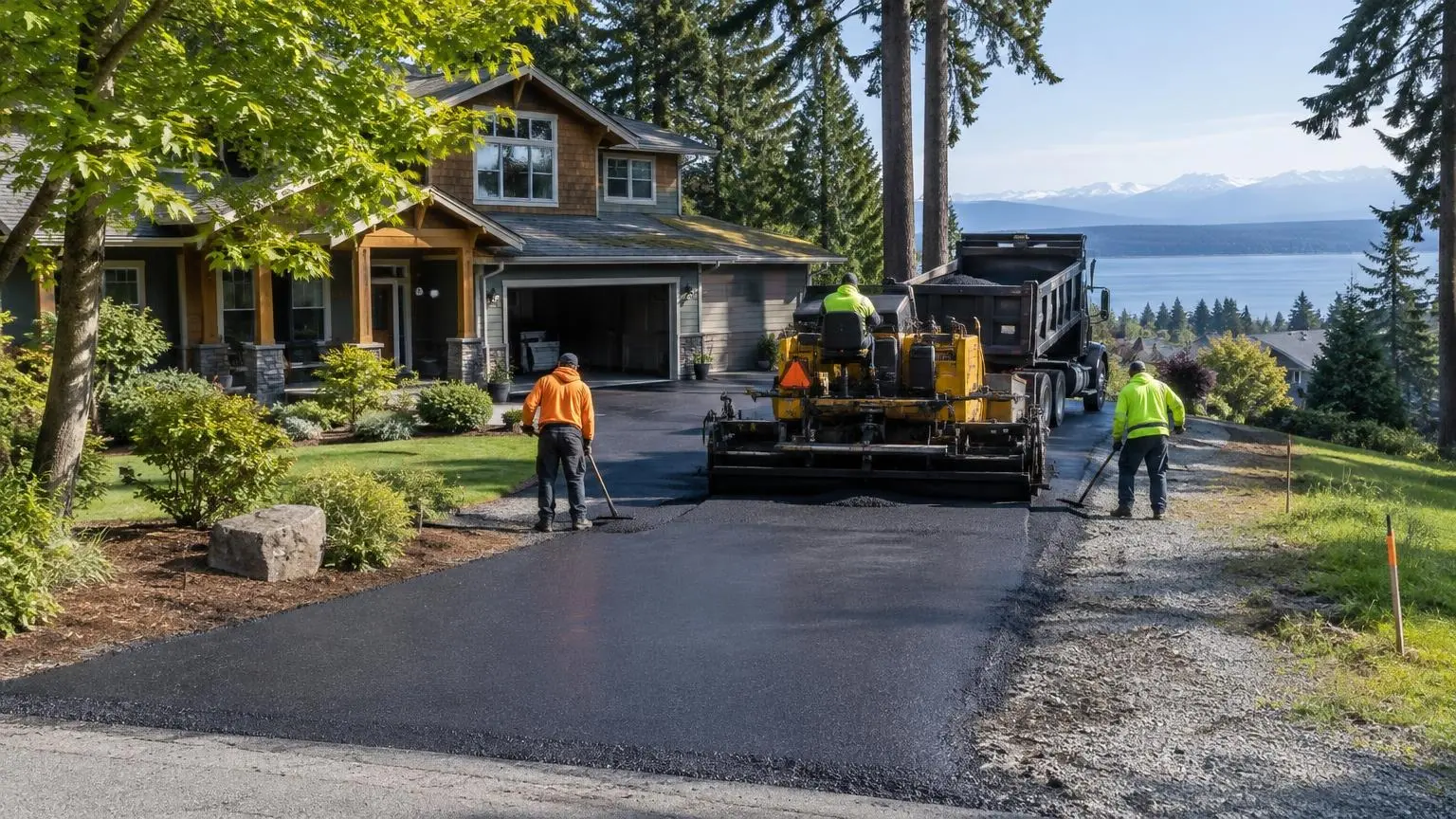
Sealcoating is a thin coating spread over asphalt to slow the damage done by sun, water, oil and fuel. Over time the binder in asphalt dries out and the surface turns gray, rough and brittle, which lets water work its way in. A sealcoat replaces that dark, tight top layer. It does not fix potholes, add strength or bridge wide cracks, so those repairs come first. Around Olympia, sealcoating is mostly about keeping water out of the pavement.
The weather window
Sealer needs dry pavement and mild temperatures to cure. HomeGuide recommends sealing when it is dry and between 50 and 95 degrees, and says most sealers need 12 to 72 hours before traffic. In the South Sound that narrows the season to roughly late spring through early fall, with the driest weeks around July. We watch the forecast closely and reschedule rather than seal ahead of rain.
Preparing the surface
Shade, needles and moss are part of the job here. We blow and sweep the surface, scrape off moss and organic buildup, treat oil spots so the sealer will bond, and fill cracks before sealing. Wide or deep cracks get hot rubberized filler. Where tree roots have lifted a section or the pavement has failed, we recommend a patch first, because sealer over broken asphalt only hides the problem for a season.
How often to seal
HomeGuide puts the resealing interval at 2 to 10 years depending on the sealer and the climate. For most homes here, every few years is plenty. Too many coats stack up into a skin that cracks and peels. New asphalt should not be sealed until it has cured, which HomeGuide puts at 3 to 6 months after paving.
Coal tar, asphalt emulsion and what we use
Sealers fall into two broad families: refined coal tar and asphalt emulsion. Under RCW 70A.440.020, coal tar pavement products could not be sold in Washington after January 1, 2012, and could not be applied to a driveway or parking area after July 1, 2013. Asphalt-based and other non-coal-tar sealers are what get used here. They need good weather to cure, which is one more reason we only seal on dry pavement in the warm months.
Signs it is time to seal
- The surface has turned from black to gray
- Small stones are showing and the surface feels rough
- Water darkens the surface and soaks in rather than beading
- Fine hairline cracks are starting to appear
If the pavement is already broken up, sealing is not the right fix yet. Repairs come first.
Parking lots
On commercial lots, sealcoating is usually paired with crack filling and restriping so the lot looks finished and the stall lines are clear. We section the lot so part of it stays open, and we plan restriping for after the sealer cures.
What This Covers
A sealcoat job is mostly preparation.
Cleaning and moss removal
Debris, needles, moss and loose material cleared from the surface.
Oil spot treatment
Stains primed so the sealer bonds instead of peeling.
Crack filling
Hot rubberized filler in cracks before the sealer goes on.
Sealer application
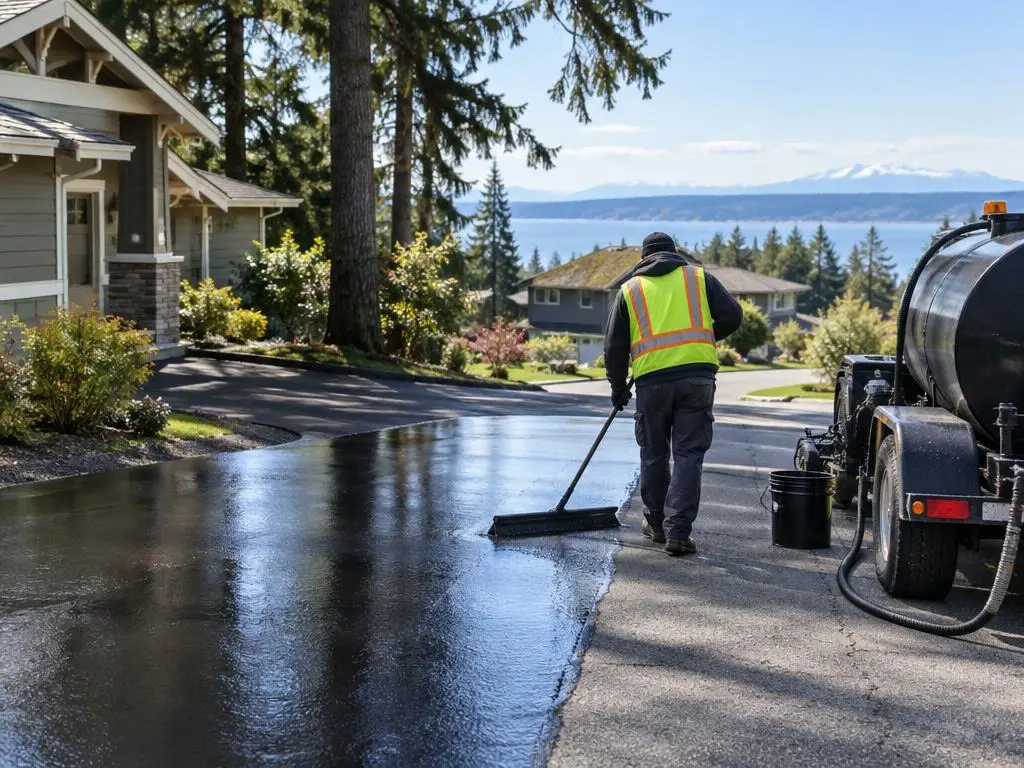
Sealer applied by squeegee or spray, edges cut in by hand.
Typical Sealcoating Costs
| Item | Published national range |
|---|---|
| Driveway sealcoating, installed (HomeGuide) | $1 to $2 per sq ft |
| 400 sq ft two-car driveway (HomeGuide) | $400 to $800 |
| 576 sq ft driveway (HomeGuide) | $580 to $1,200 |
| 864 sq ft driveway (HomeGuide) | $860 to $1,700 |
| National average job (HomeGuide) | About $600 |
| Commercial lot sealcoating (HomeAdvisor) | $0.15 to $0.30 per sq ft |
National ranges from HomeGuide and HomeAdvisor. Crack filling, moss and oil treatment, and minimum charges change the total. Your written estimate is the price.
How It Works
1. Inspect
We check for cracks, failed areas, moss and oil spots.
2. Prepare
Clean, treat stains and fill cracks.
3. Seal
Apply sealer in dry weather and block off the area.
4. Cure
Keep traffic off until the sealer has set, typically 12 to 72 hours.
Sealcoating Questions
Can you sealcoat in the rainy season?
Generally not. Sealer needs dry pavement and mild temperatures to cure, so we schedule it for the drier months and move the date if rain is forecast.
Will sealcoating stop moss from growing?
A fresh, tight surface gives moss less to grip, but shade and debris still matter. Keeping needles and leaves cleared and trimming back overhanging growth helps the most.
When can new asphalt get its first seal coat?
Wait until the asphalt has cured. HomeGuide recommends 3 to 6 months after paving.
Does sealcoating fix cracks?
No. Sealer is a thin coat. Cracks need to be filled first, and failed areas need patching.
Sealcoating Service Areas
- Asphalt Paving in Olympia, WA
- Asphalt Paving in Lacey, WA
- Asphalt Paving in Tumwater, WA
- Asphalt Paving in Tanglewilde, WA
- Asphalt Paving in Yelm, WA
- Asphalt Paving in Rainier, WA
- Asphalt Paving in Tenino, WA
- Asphalt Paving in Bucoda, WA
- Asphalt Paving in Rochester, WA
- Asphalt Paving in Grand Mound, WA
- Asphalt Paving in Centralia, WA
- Asphalt Paving in Chehalis, WA
- Asphalt Paving in Napavine, WA
- Asphalt Paving in Shelton, WA
- Asphalt Paving in McCleary, WA
- Asphalt Paving in Elma, WA
- Asphalt Paving in Montesano, WA
- Asphalt Paving in DuPont, WA
- Asphalt Paving in Lakewood, WA
- Asphalt Paving in Steilacoom, WA
- Asphalt Paving in University Place, WA
- Asphalt Paving in Roy, WA
- Asphalt Paving in Spanaway, WA
- Asphalt Paving in Eatonville, WA
Get a Sealcoating Estimate
Book sealcoating for the dry season. Free estimates in Olympia and nearby towns.