
Potholes, cracks and failed areas
Asphalt Repair & Patching in Olympia, WA
Fix the cause under the patch, and the patch lasts.
- Free on-site estimates
- Itemized written quote: base depth and asphalt thickness spelled out
- Paving scheduled around the South Sound wet season
Repairs That Address the Cause
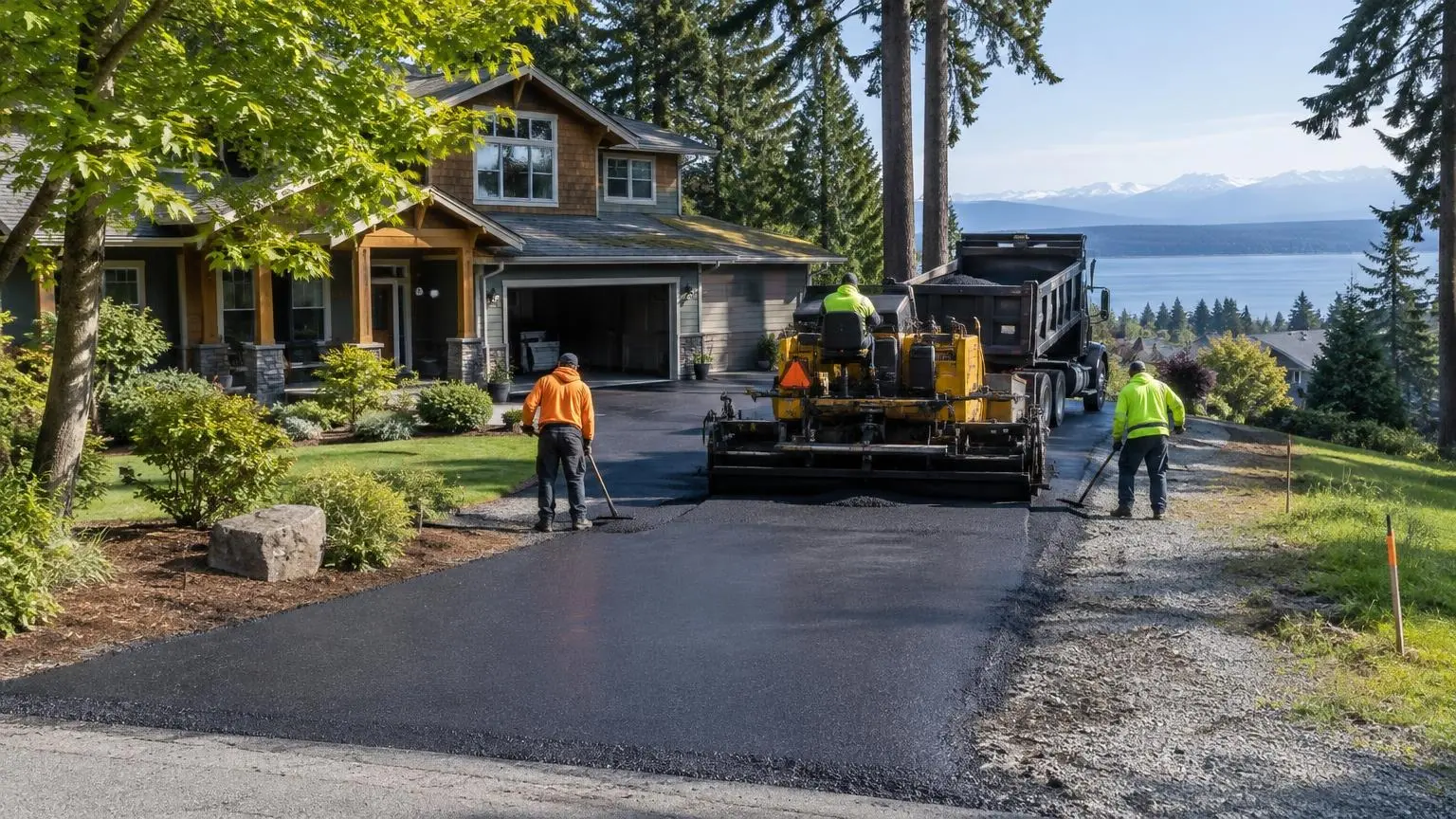
Asphalt repair and patching covers everything from a single pothole to a section of driveway that has broken up over a soft spot. Most South Sound potholes begin the same way: water gets in through a crack or a broken edge, softens the base, and freezing nights push the surface apart. A cold-patch fill tamped into the hole looks fine for a few weeks. A lasting repair removes the broken material and the wet base under it and rebuilds the area.
Types of patches
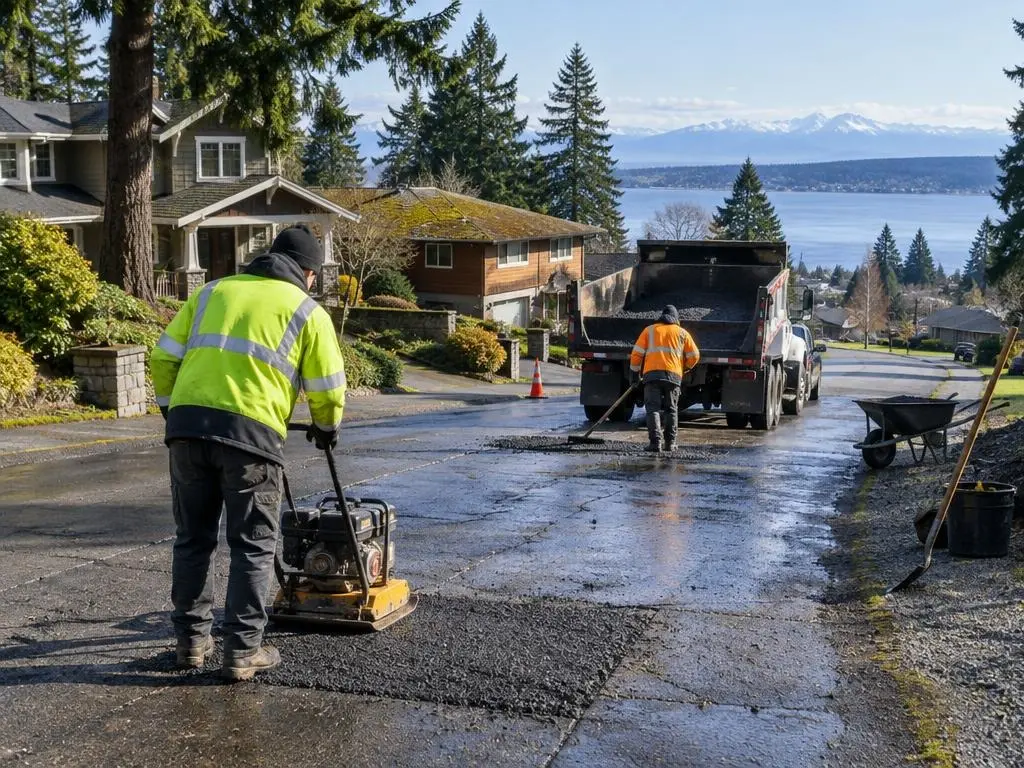
- Saw-cut, remove and replace: the damaged area is cut out square, the base is repaired and compacted, and new hot asphalt is placed and rolled. This is the most durable patch.
- Infrared repair: the existing asphalt is heated, reworked with new material and compacted, leaving no cold seam. Best for surface damage on a sound base.
- Hot-mix skin patch: a thin layer over a shallow depression or rough area.
- Cold patch: a temporary fix for winter emergencies until a permanent repair can be made in dry weather.
Crack sealing
Cracks are where water enters. Sealing them before the wet season is one of the cheapest ways to extend the life of pavement in Olympia. Each crack is blown clean and filled with hot rubberized material that flexes instead of popping loose. Very wide gaps sometimes need a backer rod first, or a patch instead. Cracks that form a connected web, called alligator cracking, mean the base is failing and should be patched rather than sealed.
Root heaves
Tall firs and maples are part of the landscape here, and their roots lift pavement. Fixing a heave means cutting out the lifted section, dealing with the root where it is safe for the tree to do so, rebuilding the base and patching. If cutting a root is not an option, we tell you the heave may return.
Repair before the rains
The best time to fix asphalt here is late summer and early fall, after the driest stretch and before the November storms. A crack sealed in September keeps a winter of rain out of the base. A pothole fixed properly before the wet season will not spread. We take repair calls year-round and can make temporary fixes in winter, but permanent work goes better on dry ground.
Utility cuts and edges
Trenches for water, sewer, gas or electrical lines often settle. Driveway edges crumble where there is no support. We cut back to solid pavement, rebuild the base, and in the case of edges, add support so the new asphalt does not break off again.
What This Covers
Repairs are matched to what failed and why.
Pothole repair
Holes cut square, base repaired and filled with hot asphalt.
Crack sealing
Blown out and filled with flexible hot sealant ahead of the rains.
Root heave repair
Lifted sections cut out, roots addressed where possible, then rebuilt.
Edge and trench repair
Crumbling edges and settled utility cuts rebuilt on a firm base.
Infrared patching
Seamless surface repairs where the base is still sound.
Typical Asphalt Repair Costs
| Repair | Published national range |
|---|---|
| Pothole filling (HomeGuide) | $100 to $400 |
| Crack filling (HomeGuide) | $0.50 to $3 per linear ft |
| Hot patch (HomeGuide) | $2 to $5 per sq ft |
| Saw-cut patch (HomeGuide) | $4 to $12 per sq ft |
| Infrared repair (HomeGuide) | $2 to $6 per sq ft |
| Minimum service fee (HomeGuide) | $100 to $250 |
National ranges from HomeGuide. Base repair depth and the number of areas change the total, and most contractors charge a minimum. Your written estimate is the price.
How It Works
1. Diagnose
We find out why the pavement failed: water, base, roots or traffic.
2. Quote
Each repair area is measured and priced.
3. Repair
Broken material removed, base fixed, hot asphalt placed and compacted.
4. Seal
Edges and nearby cracks sealed to keep water out.
Asphalt Repair & Patching Questions
Why does my pothole keep coming back?
Usually because only the hole was filled and the wet base under it was left in place. A lasting repair cuts out the damaged area and rebuilds the base before new asphalt goes in.
When should cracks be sealed?
Before the wet season, in late summer or early fall, so water cannot get in over the winter. Sealant needs dry cracks to bond.
Can you patch in winter?
We can place a temporary cold patch to make a hole safe. Lasting hot-mix patches wait for dry ground.
Is it worth repairing, or should I replace?
A handful of bad spots on otherwise solid pavement is a repair job, not a replacement. If patches would cover much of the surface, replacement or an overlay over rebuilt areas often makes more sense.
Asphalt Repair & Patching Service Areas
- Asphalt Paving in Olympia, WA
- Asphalt Paving in Lacey, WA
- Asphalt Paving in Tumwater, WA
- Asphalt Paving in Tanglewilde, WA
- Asphalt Paving in Yelm, WA
- Asphalt Paving in Rainier, WA
- Asphalt Paving in Tenino, WA
- Asphalt Paving in Bucoda, WA
- Asphalt Paving in Rochester, WA
- Asphalt Paving in Grand Mound, WA
- Asphalt Paving in Centralia, WA
- Asphalt Paving in Chehalis, WA
- Asphalt Paving in Napavine, WA
- Asphalt Paving in Shelton, WA
- Asphalt Paving in McCleary, WA
- Asphalt Paving in Elma, WA
- Asphalt Paving in Montesano, WA
- Asphalt Paving in DuPont, WA
- Asphalt Paving in Lakewood, WA
- Asphalt Paving in Steilacoom, WA
- Asphalt Paving in University Place, WA
- Asphalt Paving in Roy, WA
- Asphalt Paving in Spanaway, WA
- Asphalt Paving in Eatonville, WA
Get a Asphalt Repair & Patching Estimate
Free estimates on asphalt repairs in Olympia, Lacey, Tumwater and nearby.